Call: +255682657464
WhatsApp:+255682657464

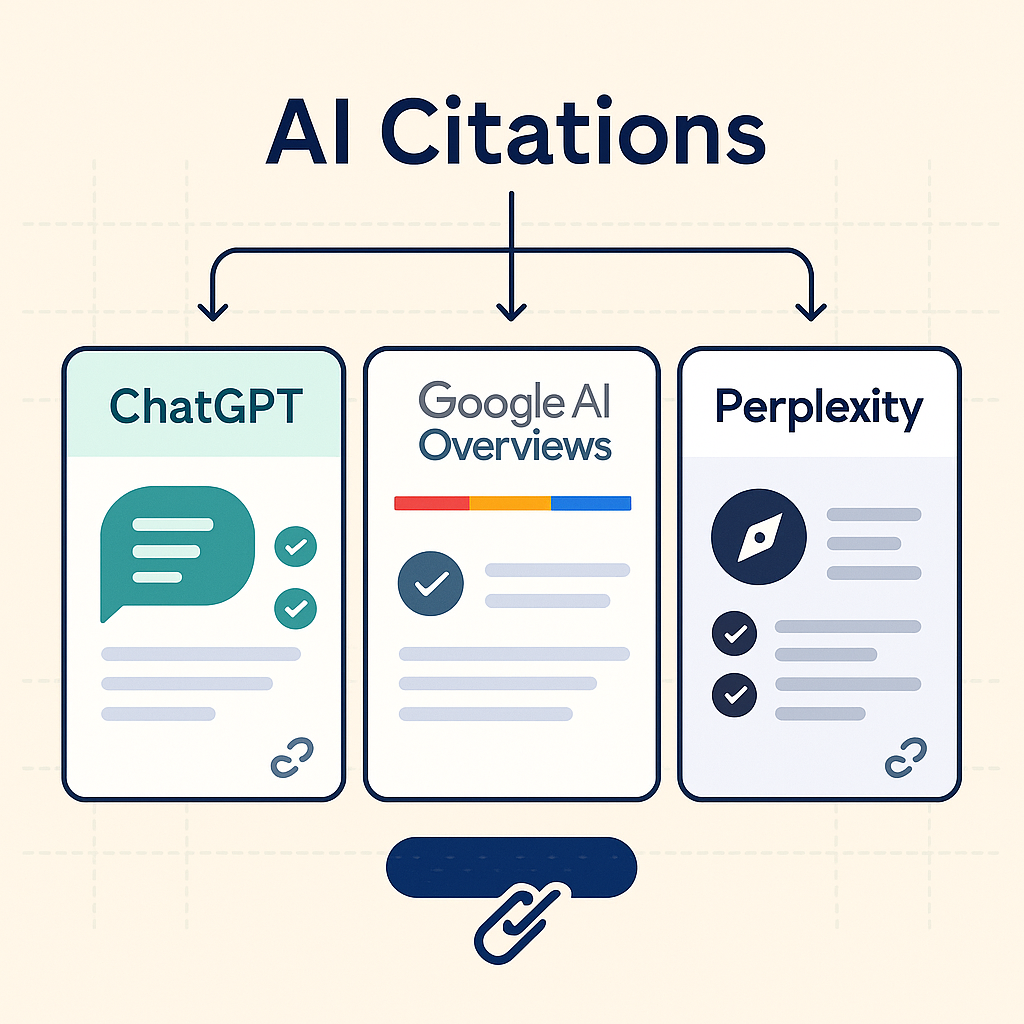
To get your Tanzanian business cited by Google’s AI Overviews, first rank on page one for the questions your customers ask — AI Overviews use the same index as normal search — then answer each question cleanly in the opening lines, back it with specific local facts (real TZS prices, real places, real results), and prove genuine expertise. There is no special markup: it is strong SEO plus content that is easy to quote.
Search “web design company in Dar es Salaam” or “safari tour operator Tanzania” today and, before the usual links, Google often writes a short AI answer with a few businesses named as sources. That citation is the new front row of search here. Getting your business named there — instead of watching a competitor take the spot — is one of the highest-value things you can do for visibility in Tanzania right now.
Google has been unusually clear about how this works, and this guide turns that into concrete steps for a business operating here. If you are new to the idea, start with what generative engine optimization means for a Tanzanian business, then come back for the hands-on version.
AI Overviews are built on Google’s ordinary search index, not a separate system. In its official guidance for site owners, Google states plainly that there are no additional requirements or special optimizations to appear in AI Overviews — a page only has to meet the same standards as a normal search result. Two mechanics matter: Google breaks a question into smaller ones and searches across them, so depth helps; and it favours Experience, Expertise, Authoritativeness and Trustworthiness. Everything below follows from those two facts.
You cannot be cited by an AI Overview for “SEO company in Tanzania” if your page is not already eligible to rank for it. Because AI Overviews pull from the top of the same results, ranking well is the price of entry — and that means the fundamentals decide everything: a fast, mobile-first site (most of your customers are on a phone, often on 4G), clean structure, and content that truly answers the local search. If your SEO foundation is weak, no AI tactic will rescue it.
An AI Overview lifts a passage that answers a question directly, so write for that. Turn your headings into the real questions Tanzanians and visitors actually type — “how much does a website cost in Tanzania?”, “which is the best area to stay in Zanzibar?” — and put a complete answer in the first 40 to 60 words beneath each, then elaborate. If the answer is buried three paragraphs down, the engine will pick a source that stated it plainly.
Vague content is not quoted; specific content is. The founding research on generative engine optimization found the biggest lift in AI citation came from adding real statistics and quoting trustworthy sources — keyword tricks did nothing. So use figures and detail only a real local operator would know: “a business website in Tanzania costs from TZS 1,000,000”, “peak safari season runs June to October”, “domains ending in .co.tz”. Numbers, places and prices get cited; “world-class” and “affordable” do not.
Google’s systems reward demonstrable expertise, and AI Overviews are no exception. Make it obvious who stands behind the content and that they genuinely work here: a named author with real credentials, a clear profile, and first-hand Tanzanian experience rather than recycled global filler. On this site, every article is written by a named, Google-Partner-certified practitioner based in Dar es Salaam and linked to a full author profile — a trust signal both people and machines read.
Remove friction between your answer and the engine. Use a logical heading structure, short paragraphs, and lists or tables where they fit. Add structured data — FAQ and Article schema especially — so machines understand each part of the page. Keep the site fast and mobile-first for Tanzanian networks, and make sure nothing blocks legitimate crawlers. None of this is a trick; it just lets the engine read you cleanly.
Engines trust a business more when other credible local sources agree it exists and is good. For a Tanzanian business that means a complete Google Business Profile, a steady stream of genuine Google reviews, a TripAdvisor presence if you’re in tourism, and profiles on directories your customers actually use. You cannot become the cited authority from your own website alone — this off-site corroboration is roughly half the work.
Because Google fans a question out into sub-questions, breadth wins. A single page rarely owns a topic; a connected set that answers the main question and every reasonable follow-up does. For a web designer, that’s a main services page supported by focused articles on cost, hosting, multilingual sites for Zanzibar, and more — each answering one real question and linking back. It is exactly the structure this AI-search series is built on.
| Do this | Not this |
|---|---|
| Answer the local question in the opening lines | Bury the answer under long introductions |
| Use real TZS prices, places and dates | Lean on “best”, “affordable”, “world-class” |
| Show a real, local, credentialed author | Publish anonymous, faceless content |
| Complete your Google Business Profile & reviews | Rely on the website alone |
| Cover the topic across a linked cluster | Depend on one thin, isolated page |
I build AI visibility for businesses in Tanzania and Zanzibar on top of the SEO that earns the rankings first.
Talk to me on WhatsAppThere is no Search Console report for AI citations yet, so measure it deliberately. Pick the questions that matter to your business — “best tour operator in Zanzibar”, “web design prices in Tanzania” — and each month check whether Google shows an AI Overview and whether your site is named. Watch analytics for referral visits from AI tools, and track two numbers: how often your brand is mentioned, and how often it is cited.
Right now, very few businesses in Tanzania and Zanzibar are doing any of this on purpose — and that is the opportunity. When a traveller asks for the best web designer in Zanzibar, or an owner in Dar es Salaam asks which SEO company to trust, the businesses that have answered those questions clearly, factually and with real local detail are the ones the AI reaches for. In Zanzibar, many of those questions come from European visitors asking in German, French or Italian — another opening almost nobody local is serving. The barrier is low today and rising; the sooner your content is built this way, the longer your head start. That is the core of AI Search Optimization at Isack Digital.
No. Google states there is no special markup for AI Overviews — they use the same index and systems as normal search. Structured data like FAQ and Article schema still helps, because it makes your content easier for machines to read and extract, but it is a clarity aid, not a secret key.
Usually one of three reasons: they rank higher for the question, they answer it more cleanly and specifically, or they carry stronger trust signals — more Google reviews, a complete profile, a clear local expert behind the content. Compare your page against theirs on those three points and the gap is normally obvious.
Yes. AI tools answer in Kiswahili too, and very little Tanzanian business content is written to be cited in Swahili — a low-competition opening. If your customers ask in Swahili, clear factual answers in their language give you an edge few competitors have.
It depends on your starting point. A site that already ranks well and just needs clearer, more specific structure can move within weeks. A site that must first fix its SEO foundation should think in months. Either way, the same work also lifts your ordinary rankings, so nothing is wasted.
No — the opposite. Because so few Tanzanian businesses optimise for AI citation, a small, focused business with genuine local detail can become the cited answer for its niche long before larger, slower competitors react. Specific and local beats big and generic here.
Getting cited by Google’s AI Overviews in Tanzania is not a separate discipline with secret tricks. It is the natural result of ranking well for local questions, answering them cleanly, being specific and credible, and covering your topic properly. Do that, and you become the source the AI reaches for — in ordinary search and in the AI answer alike.
If you’d rather have this done for you — properly, and measured against the AI engines that matter — see the results I’ve earned for other Tanzanian businesses and get in touch.